

Encountering rodents around your home can be unsettling. Especially when you are uncertain if the pest you are dealing with is a rat or mouse. Rat control vs mouse control requires different techniques for long-term prevention. Here are some tips from Vinx Pest Control for knowing whether rats or mice have invaded your home.
Size & Shape:
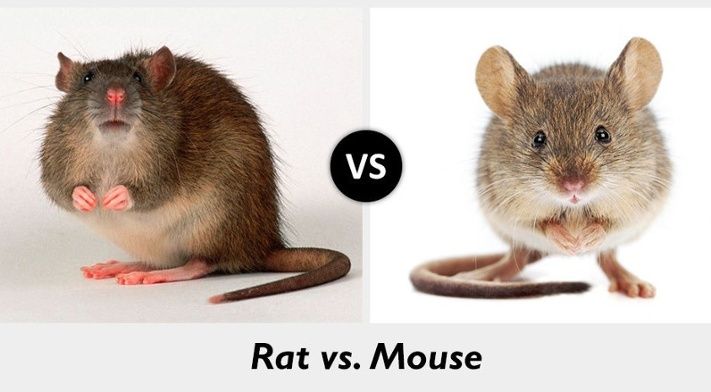
Rats tend to be much larger than mice with body lengths ranging from six to ten inches. Their bodies seem heavier and longer than mice when viewed from a distance scampering along a beam or across the attic. Rat tails are generally thicker and longer than mice tails, which appear hairier/scaly.
A mouse is only a couple inches long with a small, lightweight frame. Their tail extends from their body but is thinner and shorter than a rats tail.
Head/Eyes/Nose:
Rats have larger ears eyes and noses whereas mice have smaller, rounder ears eyes and noses.
Behavior:
Along with habitat and location clues, rats and mice behave differently within your home. Rats travel farther from their nest and are often found nesting above ground in higher areas.
You will often find rats in your attic, along roof lines or in tree limbs that extend over your house. They build nests out of insulation or debris they have shredded from packing materials or towels.
Mice live closer to the ground and build nests in wall voids and other tight areas behind appliances, inside cabinets or storage boxes. Their nests are typically smaller and located closer to a food source.
Because mice are smaller they often create multiple nests inside a home.
Rodents eat different amounts which you can sometimes identify by the way they feed. Rats leave larger food packages with bigger holes gnawed into them or in some cases half of the food still inside the package.
Mice will eat smaller amounts at a time by continuously nibbling away at food. You may notice smaller holes in food packages.
Rats travel farther from their nests so you may find droppings in your attic near a rat’s nest. Mice often stay within 25 feet of their nest so you may find mouse droppings along walls or in cabinets.
Rats usually follow vertical paths like the edges of roofs, beams or electrical wires. Mice typically stick to horizontal routes closer to the floor or ceiling.
The size and shape of rodent droppings can help you determine what pest is in your home. Rat droppings are about a half inch long and are spindle shaped. Mouse droppings are much smaller and look like grains of rice.
Both mice and rats leave behind toothmarks from chewing but rat marks will be wider and deeper. Lighter brown or black streaks left by rodents rubbing against objects are called smudge marks.
Dark smudge marks running along baseboards, wires or pipes are likely rats whereas mouse smudges will be lighter in color and closer to the ground.
If you hear scratching or gnawing at night you may be able to tell the difference by sound. Rats will cause heavier noises like the sound of wood being thumped or loud scrabbling in attic areas.
Mice make softer, quicker sounds that almost sound like fine scratching or squeaking. It will often sound like they are in your walls or flooring.
Since both rats and mice are nocturnal you may see signs of their activity during the day. Rats tend to forage during consistent time frames late at night.
Mouse are active during scattered time frames throughout the night and even in the early morning hours.
While both rats and mice can create problems within your home they pose different threats to your family’s health. Disease can spread from rodents through contact with droppings, urine or infected surfaces.
Allergies can also develop due to rodent urine and droppings. Having mice or rats in your home can cause damage over time as they chew through wiring, insulation and wood.
Think of the wiring in your home as rats and mice chew on it as tangled wires that could possibly start a fire.
Help From The Pros
Correct identification of your rodent problem is important because each pest requires different trapping methods and approaches to exclusion.
Trust the pros at Vinx Pest Control to help you quickly identify your rodent problem and create a solution that fits your unique needs. Professional inspections and rodent control services put you on the right path towards long term protection.
Final Thoughts
Rats and mice are quite different in size and appearance. Rat are larger with hairy/scaly tails and are often located higher in buildings. Mouse are small with thin tails found primarily inside walls and cabinets.
Smaller mouse droppings will be spaced closer together while rats leave larger droppings in their paths. Heavy rat scurrying will sound louder than lighter mouse movements.
Remember that if you see evidence that rodents have invaded your home, take action quickly. Proper identification is the first step towards elimination and prevention.
FREQUENTLY ASKED QUESTIONS
How can I tell if I have rats or mice?
Rats will be larger with longer tails. You will often find them higher up in your attic while mice usually live closer to the floor or inside walls.
Rodent droppings are one of the easiest ways to identify your pest. Rat droppings are half an inch long and mice droppings resemble grains of rice.
What are some signs of rodents in my home?
Runing into one of these pests inside your home is a good sign you have an issue. Common indicators include droppings in the kitchen or pantry, scratching sounds during the night, chewed wires or food packaging.
Greasy marks along baseboards are another tell tale sign of rodents in your home.
Where do mice and rats typically enter a home?
Rats tend to squeeze into holes near rooflines, vents or under edges of roofs. Mice can enter through gaps around pipes, doors or holes as small as a quarter inch.
Are rats and mice harmful to my health?
Yes! Rodents spread harmful bacteria that can make you sick by contaminating surfaces and food. Their droppings and urine can also cause allergies and breathing problems.
Can I take care of rodent control myself or do I need to call a professional?
There are plenty of effective DIY methods to rid your home of a few mice or a single rat. If you have an ongoing problem or multiple rodents, you will want to contact a professional pest control company.
Professional technicians can identify where rodents are coming from, eliminate the problem, and prevent it from happening again.